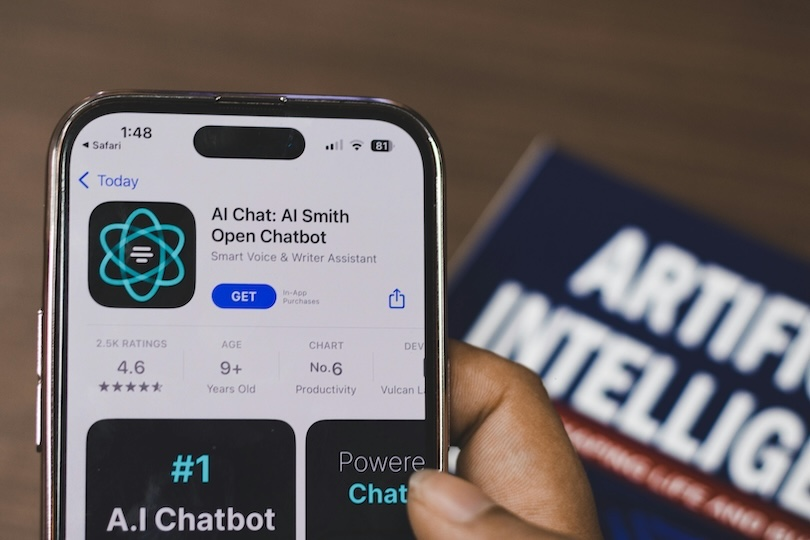
Artificial Intelligence, how about you? Are you using it on your daily activities? It is a support for you or not?
AI in 2026 is no longer a trend or a promise of the future, it has become something far more ordinary-and far more powerful. It lives inside phones, laptops, browsers, workplaces, newsrooms, and creative tools. Many people use AI every single day without even consciously thinking about it.
All of us we are now like Iron Man with his personal assistant J.A.R.V.I.S.
What changed is not just the technology.
What changed is trust, habit, and dependence.
I am a power user of the AI tools since they are on the market and I had some time to review each on of them and come in front of you with a list of the most used AI programs 2026, focusing on real usage, real behavior, and real impact. These are the tools people actually open, rely on, and return to for our main daily needs.
How the Most Used AI Programs 2026 were identified
This list is based on:
- Global adoption and mainstream usage
- Integration into daily workflows of the softwares and their specific support
- Relevance across multiple industries, how they can cover the tasks
- Tools people depend on repeatedly, not occasionally
And there it is, my top 10 pics, from top to the bottom, which I found the most useful tools.
Top 10 Most Used AI Programs 2026
1. ChatGPT
ChatGPT remains the most widely used AI assistant in the world. It is my best companion on everything I do. It has become the default place where most of the people go to think, write, plan, explain, and solve problems.
People use it for emails, learning, coding, health questions, brainstorming, summaries, and decision support. Its strength lies in flexibility-ChatGPT adapts to the user, not the other way around.
In everyday life, ChatGPT feels less like software and more like a second brain on demand.
There are several plans and versions of Chat GBT, based on what you choose, the support can be even grater:
Personal Use
- ChatGBT Go version – very limited in capabilities, much slower in processing speed, information provided, imaging processing, research in answers…
- ChatGBT Plus version – where for only 20 USD per month you can get to a much more wider tools to support your daily task. In my opinion this is the best option to have for daily common needs, study, research, images generating…
- ChatGBT Pro version – is not a cheap version, a monthly cost is 200 USD, which for most of the people is extremely demanding.

Bussines Use
- ChatGBT Plus – which you can get for 20 USD per month per user
- ChatGBT Bussines – Which you can get for 30 USD per month per user, this being the recommend option for bussines owner, where they can have multiple users for the same plan.

But you are not a bussines owner, the personal use versions will cover all your needs.
2. Google Gemini
Google Gemini thrives because it feels like a natural evolution of search. Instead of links, people want explanations. Instead of browsing, they want answers. Now as you most probable noticed as I did, when you search on Google, first you will receive a summary about your search, and only after the links will come as well.

Gemini is heavily used for:
- Fast information retrieval
- Image-based questions
- Research and fact clarification
Because it lives close to Google’s ecosystem, Gemini is often used instinctively-especially on mobile devices.
Gemini has as well to versions, for Developers and for Bussines.
Google Gemini is and extremely powerful tool, that each of us should learn how to use it a the maximum potential. You have so many things with Gemini, from Apps, Codes, etc.
There is as well with Gemini a Free version plan and as well a Paid version of the program.
3. Microsoft Copilot
Microsoft Copilot dominates professional environments. It is deeply embedded in productivity workflows, making it especially popular among office workers, managers, engineers, and analysts.

Copilot helps people:
- Write reports and documents
- Summarise meetings
- Prepare presentations
- Analyse data
It doesn’t feel conversational-it feels functional, which is exactly why professionals trust it.
Even though in many companies, the use of AI tools like ChatGBT, Gemini is restricted, the Copilot of the Microsoft it is a tools allowed and recommended to be used on all businesses, for reports, documents editing, correcting, emails, etc., it will bring value on the table and will ease the activity.
4. Canva (Magic Studio)
Canva proves that AI adoption explodes when complexity disappears. Millions of people use Canva’s AI features without even calling them “AI.”
Canva has as well a well defined category of prices, that you can access via the above link.
Design, once a specialist skill, is now accessible to anyone. Social posts, presentations, posters, and marketing materials can be created in minutes.
Canva shows that AI wins when it empowers creativity instead of intimidating users.
Instantly you can create absolutely what ever you like – the only barrier is your imaginations only. Strat writing and start creating and you will shape you great ideas in Canva projects in seconds.
5. Grammarly
Grammarly is one of the most deeply integrated AI tools in daily life. It improves writing quietly, consistently, and automatically.
People rely on Grammarly to:
- Fix grammar and clarity
- Adjust tone
- Avoid misunderstandings
I am not sure is Grammarly is unrated or not even considered AI, my self also I didn’t even noticed that is an AI tool. Used by me for a very long time as common support software on emails, projects, reports, etc.
It is trusted precisely because it does not try to replace the writer-it refines the message.
6. Claude
Claude is powerful tool developed by Anthropic.
Claude is widely appreciated for long-form reasoning and calm, structured responses. It is often used for document analysis, thoughtful writing, and complex explanations.
Users describe Claude as more “measured” and less aggressive than other AI assistants, making it popular in academic, legal, and analytical environments.

7. Perplexity
Perplexity has become a favorite for people who want answers with sources. It blends AI conversation with citation-driven research.
It is commonly used for:
- Fact-checking
- Research summaries
- Comparing viewpoints
In a world flooded with information, Perplexity appeals to users who value transparency and more accurate information.
8. GitHub Copilot
GitHub Copilot has reshaped how software is written. Developers use it to autocomplete code, explain unfamiliar logic, and speed up development cycles.
Copilot does not replace programmers. It rewards those who understand what they are building and accelerates their output dramatically.
9. Midjourney
Midjourney remains one of the most popular AI image generators for artistic and conceptual visuals. Designers, marketers, and creators use it to generate unique, stylised imagery.
Its appeal lies in creativity rather than realism, making it a powerful tool for branding and visual storytelling.
10. Grok and DeepSeek
These two tools represent the fastest-growing segment of AI adoption.
- Grok benefits from real-time information and platform integration and is managed by Elon Musk organisations.
- DeepSeek attracts users through accessibility, cost efficiency, and technical performance. It is a Chinese AI startup that is getting more territory in the run of the AI competition.
Their growth shows that AI adoption is no longer limited to a few dominant players.
Most Used AI Programs 2026 – Is AI a Good or a Bad Tool?
By 2026, most people agree on one thing: AI is powerful. Where opinions differ is whether that power is helping or harming society.
What do you think? It is the Good or the Bad?
Why many people see AI as good
- Saves time and mental energy
- Makes knowledge accessible
- Lowers barriers to creativity and business
- Helps people learn faster
For these users, the Most Used AI Programs 2026 feel like assistants-not threats.
Why others see AI as dangerous
- Over-reliance weakens critical thinking
- Creativity risks becoming automated
- Job displacement is real in some sectors
- Privacy concerns remain unresolved
These fears are not exaggerated-they are grounded in real change.
Already many companies start to lay off personal and to invest more in the AI programs to support their bussines with a much lower cost. This are hard times especially for programmers, call centers personnel, repetitive computer tasks, etc.
The uncomfortable truth
AI does not make people smarter or dumber.
It amplifies existing habits.
Disciplined users grow stronger.
Passive users grow dependent.
Relying only on AI capabilities and not developing yourself by reading books, watching documentaries, making research by yourself, getting outside for answers, checking the information from various resources, it is one of the biggest mistakes that you can do. Complacency is the biggest threat of our days!
Most Used AI Programs 2026 – How AI Is Used in Media and Newsrooms
Media and journalism are among the heaviest professional users of AI in 2026-quietly and strategically.
AI is used in newsrooms to:
- Summarise long reports and documents
- Transcribe interviews
- Draft article structures
- Translate content
- Test headlines and optimise clarity
What AI does not do in serious journalism:
- Make editorial decisions
- Publish without human review
- Replace investigative reporting
Most reputable newspapers treat AI as an assistant, not an author. Accountability remains human and always will be like this, regardless of who wrote the article: AI or Human.
AI did not weaken journalism-economic pressure already did. Used responsibly, AI gives journalists more time to investigate, verify, and explain.
Where AI truly stands in 2026
The most used AI programs 2026 reveal a simple truth: AI is now infrastructure. Like the internet or electricity, it is embedded into daily life.
Avoiding AI completely is unrealistic.
Trusting it blindly is dangerous. Really dangerous and you should never be 100% only AI – decision is yours – check first – do not copy and past everything from there as good!
The healthiest approach is conscious use:
- Let AI assist, not decide
- Let AI draft, but humans judge
- Let AI accelerate, not replace thinking
AI is not shaping the future alone.
People are shaping themselves-with AI in our hands we can doo things better, easier, faster!
Comments
8 responses to “Most Used AI Programs 2026 – The 10 AI Tools People Truly Rely on Today”
**citrus burn**
CitrusBurn is a Mediterranean-inspired thermogenic formula created to support a naturally slower metabolism, encourage efficient fat utilization.
**heroup**
HeroUP is a premium mens wellness formula designed to support sustained energy, physical stamina, and everyday confidence.
**native gut**
NativeGut is a precision-crafted nutritional blend designed to nurture your dog’s digestive tract.
**mitolyn**
Mitolyn is a carefully developed, plant-based formula created to help support metabolic efficiency and encourage healthy, lasting weight management.
**aqua sculpt**
AquaSculpt is a high-quality metabolic support supplement created to help the body utilize fat more efficiently while maintaining steady, reliable energy levels throughout the day.
**purdentix**
PurDentix is a revolutionary oral health supplement designed to support strong teeth and healthy gums. It tackles a wide range of dental concerns
**primebiome**
The bodys natural process of skin cell renewal is essential for preserving a smooth, healthy, and youthful-looking complexion.
**prostapeak**
Prosta Peak is a high-quality prostate wellness supplement formulated with a comprehensive blend of 20+ natural ingredients and essential nutrients to support prostate health