Do you like Diamonds? Did you ever wondered how they are produced or even better who produce them? Which is the leading country and companies in this sector?
For most people, diamonds are still associated with vast open pits or remote inland mines. In reality, some of the world’s most valuable natural diamonds are no longer extracted from land at all, or not completely. They are recovered from the ocean floor, by offshore diamond mining companies, using technology more similar to offshore energy projects than traditional mining. At the center of this quiet but decisive shift sits one country: Namibia.
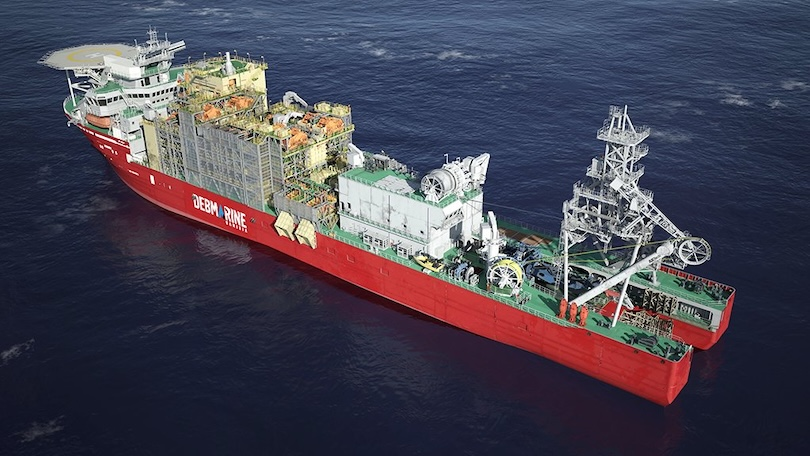
This are very difficult accessible, they requires specialised vessels, ultra-modern technology, which are very expensive and only very few companies can afford such installations. The cost of such vessel can go to 500 millions USD.
Did you know that the most expensive diamond ever sold had the price of 72 millions USD, and was sold by De Beers in 1999. The diamond is named CTF Pink Star.

Today, when analysts, investors, and industry insiders talk about offshore diamonds, they are effectively talking about Namibia. This is not marketing or national branding – it is a structural reality shaped by geology, capital discipline, regulatory stability, and a mining ecosystem that has taken decades to build. In an industry where mistakes are extremely expensive and learning curves are long, Namibia has become the uncontested global reference point for offshore diamond mining.
Below explains why and how Namibia controls the world’s offshore diamonds, who the key offshore diamond mining companies are, and why this dominance is unlikely to be challenged anytime soon.

Offshore Diamonds: A Supply Chain Most People Never See
Offshore diamond mining remains one of the least visible segments of the global mining industry. There are no massive pits, no towering headframes, and no easily accessible sites. Instead, production happens far offshore, on the seabed, through purpose-built vessels operating with subsea crawlers, suction systems, and onboard recovery plants.
From a supply-chain perspective, offshore diamond mining offers something rare:
- High-quality natural diamonds, much better quality then the ones from onshore extractions
- Predictable long-term output
- Minimal land-use conflict
- Strong traceability and security
But these advantages come at a cost. Offshore diamond mining companies require enormous upfront investment, advanced marine engineering, and long-term political certainty. Very few countries can support all three simultaneously.
Did you know that Anwerp is the bank of the diamonds? It is considered the capital of diamonds, where the most diamonds are traded. Have you seen the movie Den of Thieves 2 – Pantera (2025)?
Namibia can and is doing very well in this domain, being the leading market.
The Geological Accident That Changed Everything
Namibia’s offshore diamond wealth is the result of a geological process that unfolded over tens of millions of years. Diamonds formed deep underground in southern Africa were carried by ancient river systems westward toward the Atlantic Ocean. Over time, erosion and ocean currents concentrated these diamonds along Namibia’s continental shelf.
This process did more than relocate diamonds. It sorted them.
Heavier, higher-quality stones settled in specific seabed traps, while weaker or fractured stones were gradually destroyed by ocean movement. The result is an offshore diamond resource that is widely recognized for its:
- High proportion of gem-quality stones
- Naturally polished surfaces
- Relatively consistent grade distribution
This is not a resource that can be “discovered” elsewhere with exploration budgets. It is geographically fixed, finite, and irreplaceable. Namibia does not just have offshore diamonds – it has the right offshore diamonds.
Why Offshore Diamond Mining Is Not Easily Replicated
Many resource-rich countries assume that mining success can be replicated with enough investment. Offshore diamond mining breaks that assumption.
To operate at scale, offshore diamond mining companies must overcome multiple barriers simultaneously:
1. Extreme Capital Intensity
A single modern diamond recovery vessel can cost hundreds of millions of dollars (500 millions USD) before it produces a single carat. This excludes exploration vessels, subsea crawlers, environmental monitoring systems, and specialized crews.
2. Specialized Technology
Offshore diamond mining is not drilling. It is precision seabed excavation under strict environmental controls. Recovery systems must minimize dilution while operating in unstable marine environments.
3. Long Development Timelines
From geological sampling to full production, offshore projects can take a decade or more to mature. This discourages speculative or short-term investors.
4. Regulatory Stability
Offshore projects are destroyed by policy volatility. Without predictable licensing, taxation, and environmental frameworks, capital simply does not commit.
Namibia meets all four conditions. Most countries do not.
The Core Offshore Diamond Mining Companies Behind Namibia’s Dominance
Debmarine Namibia
If offshore diamond mining has a global epicenter, Debmarine Namibia is it. The company is a 50/50 joint venture between the Government of Namibia and De Beers Group and operates the only true deep-water offshore diamond mining fleet in the world.
Debmarine Namibia’s importance lies not just in output volume, but in operational capability. It has spent decades refining offshore recovery techniques, vessel integration, and long-term resource modeling.
Flagship vessels that define the industry:
- MV Benguela Gem – the world’s largest and most advanced diamond recovery vessel, capable of operating in deeper waters with unprecedented efficiency

- MV Mafuta – a former production backbone that remains a critical asset in the fleet
- SS Nujoma – a high-spec exploration and sampling vessel that underpins long-term offshore planning

Together, these vessels allow Debmarine Namibia to move seamlessly from exploration to sustained production – a capability unmatched anywhere else globally.
For investors, this matters because Debmarine Namibia is not chasing rapid expansion. It is optimizing for longevity, predictability, and capital preservation.
Namdeb
While Debmarine dominates deep-water offshore mining, Namdeb plays an equally important supporting role. Namdeb operates Namibia’s land-based and coastal diamond assets, including near-shore marine deposits that form the transition zone between land and offshore resources.
This hybrid position provides two strategic advantages:
- Geological continuity across the entire diamond system
- Operational flexibility during offshore maintenance or market downturns
Namdeb does not compete with Debmarine in deep water. Instead, it stabilizes national diamond output and supports long-term planning. In a sector where supply disruptions can have global pricing implications, this stability is critical.

De Beers Group
Above both operating companies sits De Beers Group, acting not as a day-to-day marine operator, but as the strategic and technological anchor of Namibia’s offshore diamond ecosystem.
De Beers contributes:
- Long-term capital discipline
- Marine mining research and development
- Global distribution and market intelligence
- ESG frameworks aligned with international expectations
This layered structure – state participation, operational specialisation, and global market access – is one of the most under-appreciated strengths of Namibia’s offshore diamond model.

Why No Other Country Has Closed the Gap
Several countries have diamonds. Very few have offshore diamonds. Fewer still have the political and industrial conditions to exploit them.
- South Africa pioneered early marine diamond recovery but never scaled operations to Namibia’s depth or consistency.
- Angola, Botswana, Canada, and Russia remain overwhelmingly focused on onshore deposits.
- New entrants face prohibitive costs, long permitting cycles, and uncertain returns.
The uncomfortable truth is that offshore diamond mining rewards early movers. Namibia moved early, invested patiently, and protected the sector strategically.
Offshore Diamonds in a Changing Market
The global diamond market is evolving. Synthetic diamonds are capturing volume at the lower end of the market, particularly in industrial and mass jewelry segments. Natural diamonds, by contrast, are increasingly competing on rarity, origin, and quality.
Offshore diamonds fit this shift perfectly:
- High gem quality
- Limited supply
- Strong provenance and traceability
- Lower geopolitical risk compared to some onshore regions
For offshore diamond mining companies, this positions marine production as a long-term premium segment rather than a volume play.
ESG, Environmental Controls, and Social License
One of the most common misconceptions about offshore mining is environmental risk. In reality, Namibia’s offshore diamond sector operates under some of the strictest monitoring regimes in global mining.
Key features include:
- Controlled seabed disturbance with post-mining rehabilitation
- Continuous environmental monitoring
- Transparent reporting aligned with international standards
This approach is not cosmetic. Offshore operations that lose social license lose capital access. Namibia’s framework has helped offshore diamond mining companies retain investor confidence even as ESG scrutiny intensifies.
Strategic Control Without Nationalisation
Namibia’s approach to offshore diamonds is neither laissez-faire nor extractive nationalism. Instead, it reflects a structured partnership model where the state:
- Retains strategic ownership
- Secures long-term fiscal benefits
- Encourages reinvestment and skills development
This balance has insulated offshore diamond mining companies from abrupt policy shifts while ensuring national benefit – a combination many resource-rich countries struggle to achieve.
Why Namibia’s Dominance Is Likely to Persist
Looking ahead, Namibia’s control over offshore diamonds is unlikely to erode quickly. The reasons are structural:
- The best marine deposits are already licensed
- Capital requirements continue to rise
- Technical expertise remains highly concentrated
- Political stability remains a decisive advantage
Rather than new competitors emerging, future growth is more likely to come from incremental efficiency gains, deeper-water operations, and extended mine life within existing concessions.
Control Built on Patience
Namibia does not control the world’s offshore diamonds because it produces the most. It controls them because it built an ecosystem that others cannot easily copy.
Through Debmarine Namibia’s deep-water fleet, Namdeb’s geological continuity, and De Beers Group’s strategic oversight, offshore diamond mining has become a capital-intensive, technology-driven niche with exceptionally high barriers to entry.
In a global industry shaped increasingly by quality, traceability, and long-term supply security, Namibia’s offshore diamonds are not just a resource. They are a strategic asset.
Daily in Namibia’s offshore exploration it is estimated a production of about 2740 carats per day.
Would you like to work in such industry? Let me your thoughts about it!
Comments
One response to “Why Namibia Controls the World’s Offshore Diamonds”
**boostaro**
Boostaro is a purpose-built wellness formula created for men who want to strengthen vitality, confidence, and everyday performance.